Mutualisme
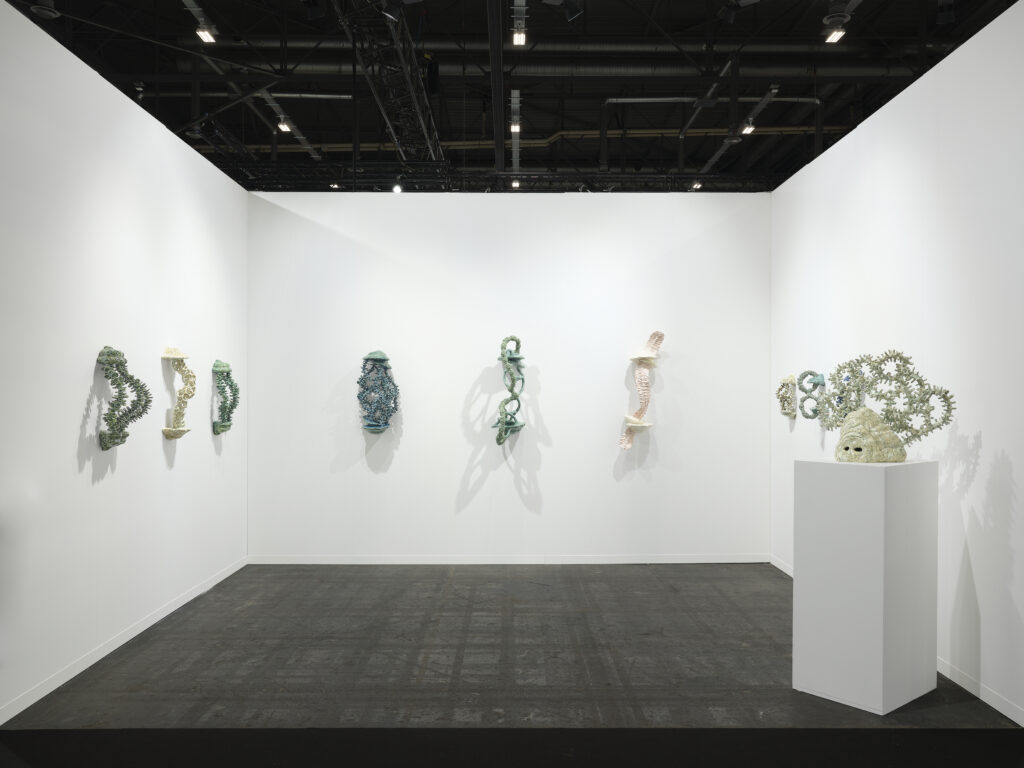
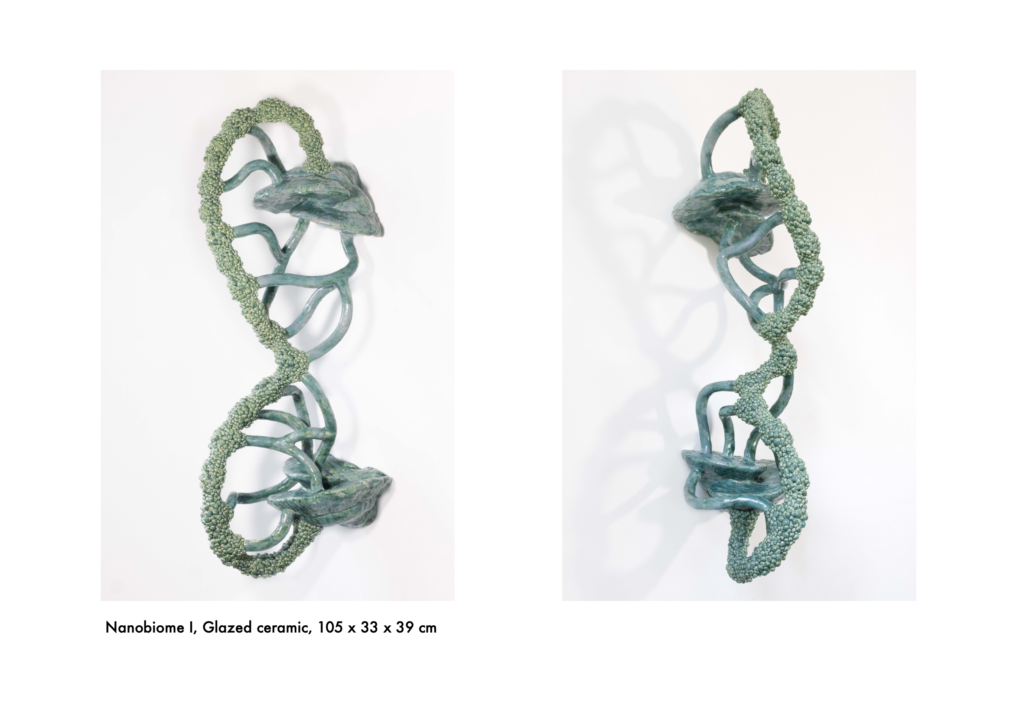
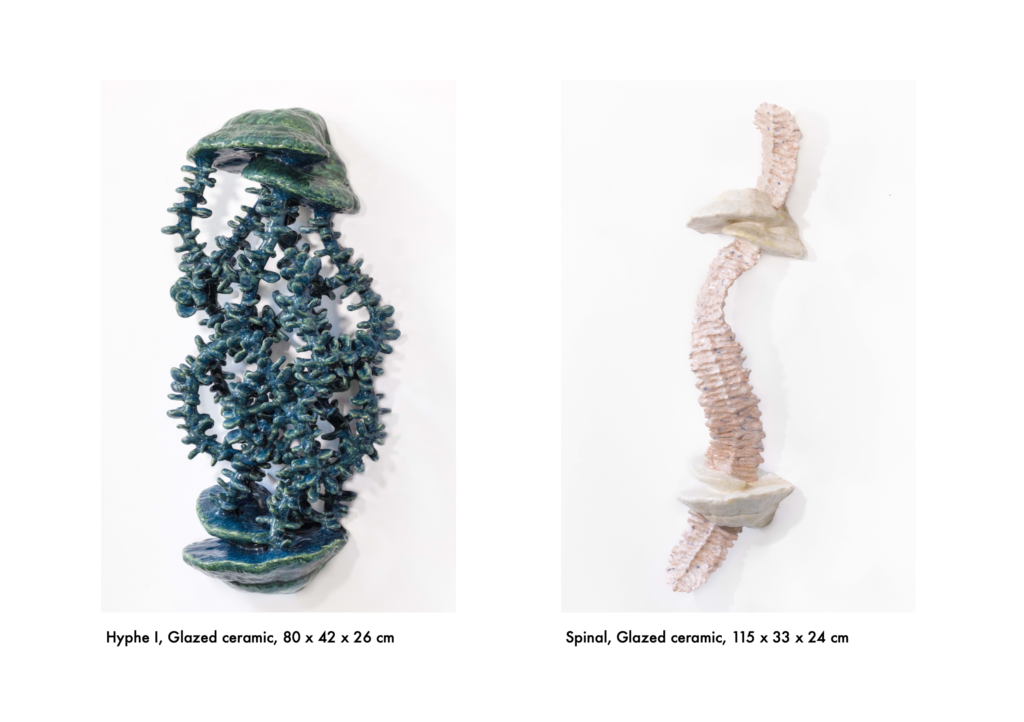
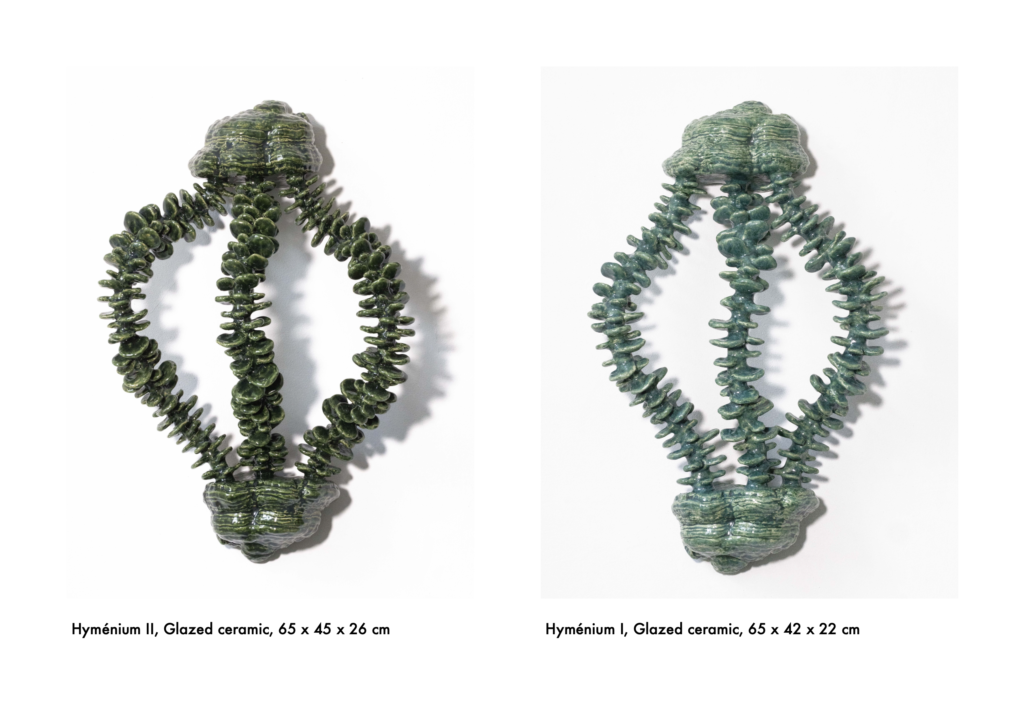
The sculptures presented in Mutualism appear as the visible manifestations of a broader system, whose essential part remains invisible, subterranean, in motion. They unfold a single line of research across different scales, without hierarchy or fixed center. Each sculpture can be apprehended individually, while belonging to a shared conceptual ensemble founded on transformation.
It is within this network of interdependence that the exhibition explores the notion of mutualism: a biological interaction in which several organisms coexist and derive reciprocal benefit from their relationship. Mycorrhizae, associations between plant roots and fungal filaments, constitute a fundamental form of this. Plants provide sugars produced through photosynthesis; in return, fungi facilitate access to water and nutrients. This relationship is based on exchange and adaptation, without fusion or domination.
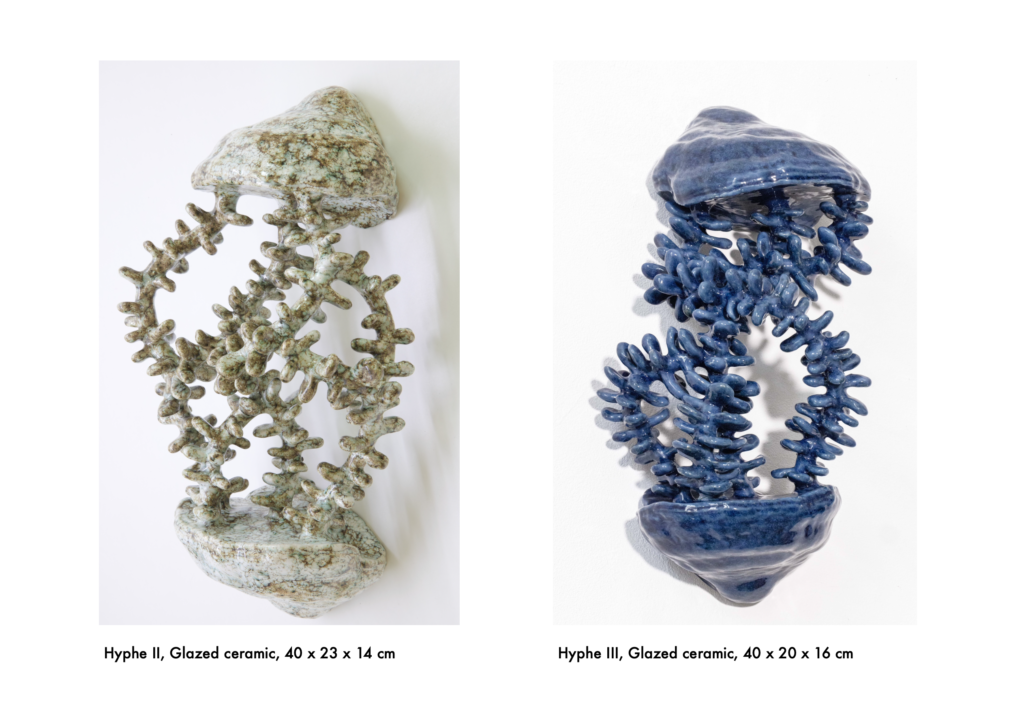
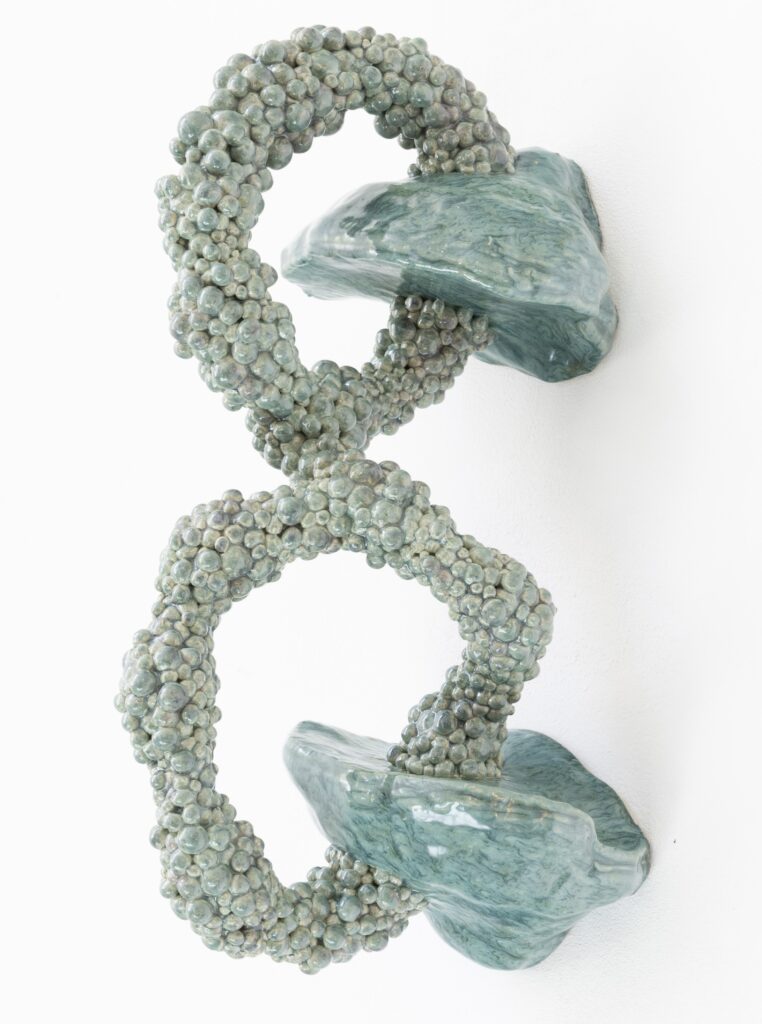
These exchanges are made possible by microscopic filaments called hyphae, which compose the mycelium. The mycelium is not an object, but an expanding network characterized by exploration and irregularity. This logic is manifested in the sculptures, which develop through extensions, branching, and zones of respiration. Volumes are organized through contacts and tensions, without any predominant point of view. Each sculpture appears as a transitory state, the provisional crystallization of an ongoing process.
Made in ceramic, these works push the medium toward configurations of lightness and tension. Air plays a determining role; the structures sometimes seem to hold together by the bare minimum. The surfaces, traversed by fine textures and micro-structures, evoke a world situated between the microscopic and the cosmic, where the human scale ceases to be a central reference.
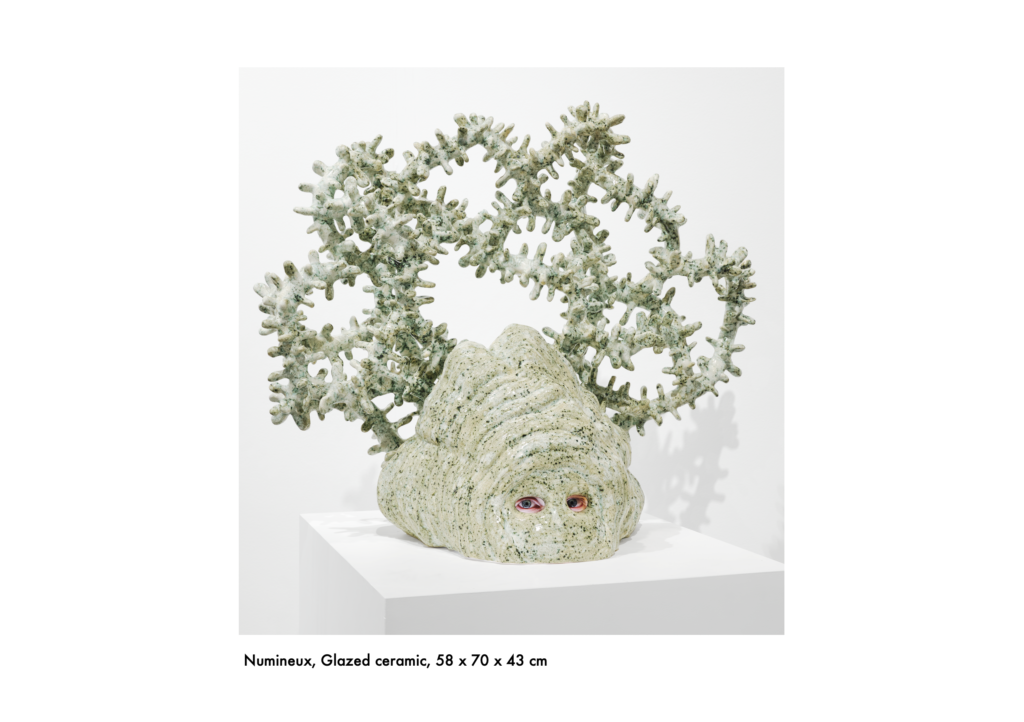
At the center, a performative sculpture takes up the same formal principles. Only upon a second look does a presence reveal itself. Two eyes appear. The sculpture is inhabited. In this work entitled Numinous, the artist’s body is concealed within the form. It is neither subject nor center, but enters into direct relation with the material, in a state of prolonged immobility. Body and sculpture operate according to a principle of mutualism: the material envelops and constrains, while the human presence activates the work from within. The viewer, believing themselves to be observing, discovers that they are engaged in a relationship of reciprocal presence.
The term numinous here designates an experience that exceeds language and immediate interpretation. A presence imposes itself, suspending habitual reflexes of understanding, close to that sudden sensation of being looked at by the world, without any identifiable human subject. Perception then ceases to be an act of mastery and becomes an experience of openness, a state of sensitive availability in which the work acts directly upon the gaze and the body.
In Mutualism, the artist’s body is neither external to the work nor placed above it. It dissolves into the sculptural process, integrated into the material as an active element among others. The boundaries between sculpture, body, and gaze blur in favor of a relational experience, in which existence is defined by connections, visible or invisible.
These exchanges are made possible by microscopic filaments called hyphae, which compose the mycelium. The mycelium is not an object, but an expanding network characterized by exploration and irregularity. This logic is manifested in the sculptures, which develop through extensions, branching, and zones of respiration. Volumes are organized through contacts and tensions, without any predominant point of view. Each sculpture appears as a transitory state, the provisional crystallization of an ongoing process.
Made in ceramic, these works push the medium toward configurations of lightness and tension. Air plays a determining role; the structures sometimes seem to hold together by the bare minimum. The surfaces, traversed by fine textures and micro-structures, evoke a world situated between the microscopic and the cosmic, where the human scale ceases to be a central reference.
At the center, a performative sculpture takes up the same formal principles. Only upon a second look does a presence reveal itself. Two eyes appear. The sculpture is inhabited. In this work entitled Numinous, the artist’s body is concealed within the form. It is neither subject nor center, but enters into direct relation with the material, in a state of prolonged immobility. Body and sculpture operate according to a principle of mutualism: the material envelops and constrains, while the human presence activates the work from within. The viewer, believing themselves to be observing, discovers that they are engaged in a relationship of reciprocal presence.
The term numinous here designates an experience that exceeds language and immediate interpretation. A presence imposes itself, suspending habitual reflexes of understanding, close to that sudden sensation of being looked at by the world, without any identifiable human subject. Perception then ceases to be an act of mastery and becomes an experience of openness, a state of sensitive availability in which the work acts directly upon the gaze and the body.
In Mutualism, the artist’s body is neither external to the work nor placed above it. It dissolves into the sculptural process, integrated into the material as an active element among others. The boundaries between sculpture, body, and gaze blur in favor of a relational experience, in which existence is defined by connections, visible or invisible.
Date
2025-2026
Material
glazed ceramic
Type of work
Sculpture
Location
ArtGenève Palexpo 2026
Pictures by
thomas annaheim lambert